BBC Spy Camera Documentary: UK Hotel Cameras Found (2026)
Disclosure: This page contains affiliate links. We may earn a commission at no extra cost to you. We only recommend products we've tested or thoroughly researched. Full disclosure.
The BBC Eye documentary Exposed: China’s Spycam Porn, which aired in February 2026, revealed something most travelers hoped wasn’t real: professionally installed hidden cameras inside UK hotels, recording guests in their most private moments. The footage was being sold on overseas platforms.
This isn’t a scare piece. The documentary is a credible, well-sourced investigation from one of the world’s most respected news organizations. Here’s what it found, what it means for you, and exactly what you can do about it.
What did the BBC Eye documentary actually find?
The investigation uncovered hidden cameras in multiple UK hotels — not budget motels, but mainstream accommodations. The key findings were alarming in their sophistication:
- Hardwired into electrical systems. The cameras drew power from the building’s wiring, meaning no batteries to die and no wireless signals to detect.
- Pinhole lenses under 1mm. These are nearly invisible to the naked eye, embedded in ceiling tiles, bathroom fixtures, and permanent fittings. Smoke detectors were among the fixtures used — learn how to tell if a smoke detector has a camera.
- No infrared illumination. Many consumer cameras use IR LEDs for night vision, which phone cameras can detect. These didn’t — they relied on ambient light only.
- Footage sold on overseas platforms. The recordings weren’t for personal use. They fed into an organized operation distributing intimate footage without consent.
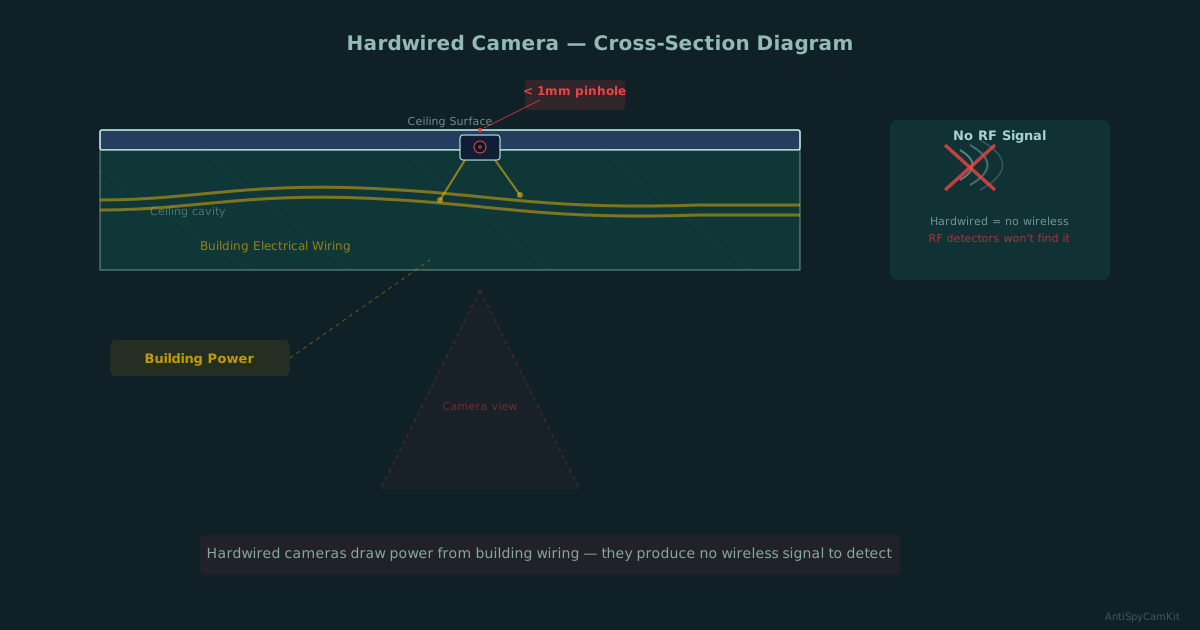
The documentary’s investigators noted that standard consumer RF detectors — the kind most travelers carry — missed these cameras entirely. Only professional-grade spectrum analyzers and physical inspection by trained investigators found them.
Does this mean consumer detectors are useless?
No. Context matters here.
The cameras in the BBC documentary represent the high end of the threat spectrum — professional installations designed specifically to evade detection. The vast majority of hidden cameras found in hotels and Airbnbs are consumer-grade devices: WiFi-enabled cameras disguised as USB chargers, alarm clocks, or smoke detectors. These are exactly what consumer detectors are built to find.
Think of it like door locks. A determined burglar with professional tools can defeat most residential locks. That doesn’t make locking your door pointless — it stops the overwhelming majority of threats.
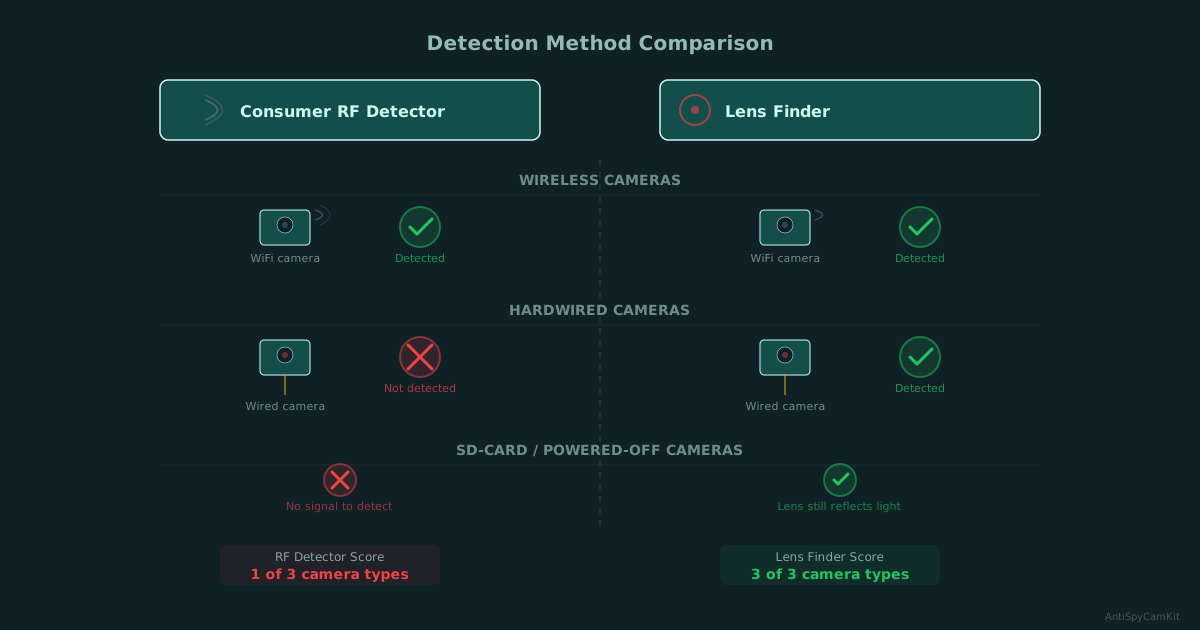
RF detectors still catch wireless cameras, which remain the most common type found in accommodations. Lens detectors — which work by bouncing infrared light off camera lenses — can find any camera, including the hardwired ones the BBC documented, as long as you have line of sight to the lens.
The takeaway: a basic sweep still protects you against most real-world threats. But the BBC documentary is a strong argument for upgrading from RF-only detection to include lens finding.
What detection method works against hardwired cameras?
Lens detection is the answer. Unlike RF scanning, which relies on a camera broadcasting a wireless signal, lens finders work on a simple physical principle: camera lenses reflect infrared light in a distinctive way.
A quality lens finder like the SpyFinder Pro uses a ring of bright infrared LEDs. When you scan a room through its viewfinder, any camera lens — powered or unpowered, wireless or hardwired, recording or dormant — appears as a bright red dot. The BBC documentary’s hardwired cameras would show up with this method because the lens itself is the detection target, not the electronics behind it.
This is why security professionals have always prioritized lens detection over RF scanning for thorough sweeps.

SpyFinder Pro
Best Against Hardwired Cameras
Detects all camera lenses via infrared reflection — works on hardwired cameras that RF detectors miss completely
- Finds wired & wireless cameras
- Infrared lens reflection tech
- 15+ hour battery
For travelers who want both RF and lens detection without carrying two devices, the JMDHKK K18+ combines four detection methods in one unit at a more accessible price point. Its lens detection mode won’t match the SpyFinder Pro’s precision, but it covers both wireless and wired threats.

JMDHKK K18+
Best All-in-One for Travelers
Combines RF, lens, magnetic, and audio detection — catches both wireless and wired cameras
- 4 detection methods
- Catches wired & wireless cameras
- Compact for travel
How should you sweep a hotel room after watching this documentary?
The BBC findings don’t change the fundamentals of a good room sweep — they reinforce why you should do one every time. Here’s the updated protocol, informed by what the documentary revealed:
1. Visual inspection first (2 minutes)
Walk the room systematically. Check every smoke detector for pinholes. Run the fingertip test on all mirrors (your finger should have a gap between it and the reflection on a normal mirror — no gap means two-way glass). Inspect USB chargers, alarm clocks, and anything with line of sight to the bed or bathroom.
The BBC cameras were in permanent fixtures, so pay extra attention to ceiling tiles, bathroom vents, towel hooks, and light fixtures that look slightly different from others in the room.
2. Phone IR scan (1 minute)
Turn off every light. Open your phone’s front-facing camera (it lacks the IR filter the rear camera has). Slowly scan every surface. Infrared LEDs from night-vision cameras appear as purple or white dots on screen.
The BBC’s cameras didn’t use IR — but many other hidden cameras do. This step costs you 60 seconds and catches the most common consumer-grade threats.
3. Lens detection sweep (2 minutes)
If you carry a lens finder, this is where it earns its value. Scan the room through the viewfinder, paying special attention to:
- Smoke detectors and fire sprinkler heads
- Bathroom fixtures and vents
- Picture frames and decorative items facing the bed
- Any tiny holes in walls or furnishings
- Ceiling tiles, especially those that look newer or slightly misaligned
This is the step that would have caught the BBC documentary cameras.
4. Wi-Fi network scan (1 minute)
Use a free app like Fing to scan the room’s network. Look for unfamiliar devices with camera-related names or generic IoT identifiers. This catches wireless cameras but not the hardwired ones from the documentary.
For the complete step-by-step protocol, see our 5-minute hotel room sweep guide.
Should you be worried about staying in UK hotels?
Proportionately, no. The BBC documentary exposed a real and serious problem, but hidden cameras in UK hotels remain uncommon relative to the millions of hotel stays that happen every year. The investigation focused on specific properties where tips led investigators — it wasn’t a random sample showing cameras everywhere.
For context on how widespread the problem is beyond this investigation, see our analysis of how common hidden cameras really are in hotels.
That said, the documentary proved three important things:
- Professional installations exist. This isn’t just amateurs sticking a £20 camera in a clock radio. Organized operations with technical expertise are installing surveillance in commercial accommodations.
- Consumer RF detectors have blind spots. If your detection strategy relies entirely on scanning for wireless signals, you’re missing an entire category of threat.
- The footage has commercial value. This isn’t voyeurism for personal gratification — it feeds into a distribution network. That economic incentive means the problem won’t solve itself.
The rational response isn’t panic. It’s preparation. A 5-minute sweep on check-in, a basic understanding of detection methods, and — if you travel frequently — a quality lens finder in your bag.
What are hotels doing about this?
The BBC documentary has triggered immediate responses across the UK hospitality industry:
- Major hotel chains have announced enhanced inspection protocols for rooms and common areas
- Industry bodies are developing standardized sweep procedures for housekeeping staff
- Regulatory discussions are underway about mandatory camera detection sweeps between guest stays
These are positive developments, but they’ll take time to implement consistently. In the meantime, your own sweep remains your most reliable line of defense.
What equipment should you carry when traveling?
Based on the BBC documentary’s findings, here’s what we now recommend for regular travelers:
Minimum (free): Your smartphone. The front camera IR scan and a Wi-Fi scanning app like Fing cover the basics. Follow our hotel room sweep guide for the technique, then use this phone-only hidden camera workflow if you want a deeper iPhone/Android checklist.
Recommended ($59): The JMDHKK K18+ adds RF detection and basic lens finding to your phone-based sweep. It catches wireless cameras your phone might miss and adds magnetic detection for GPS trackers.
Best protection ($149): The SpyFinder Pro provides military-grade lens detection that finds every camera regardless of how it’s powered or connected — exactly the type of camera the BBC documentary uncovered.
For full product comparisons and our testing results, see our best hidden camera detectors for 2026 guide.

Aroeally 4-in-1 Detector
Budget Travel Pick
Solid RF and lens detection under $40 — a meaningful upgrade over phone-only sweeps
- RF + lens detection
- Under $40
- Great first detector
How do you report a hidden camera in a UK hotel?
If you find a camera — or anything suspicious — in a UK hotel room:
- Don’t touch it. Photograph and video it from multiple angles. Note exactly where it’s positioned and what it can see.
- Leave the room and inform hotel management immediately.
- Call the police. In England and Wales, hidden cameras in private spaces violate the Voyeurism (Offences) Act 2019. Dial 101 for non-emergency reporting or 999 if you feel unsafe.
- Report to the Information Commissioner’s Office (ICO) if you believe personal data (your image) was captured without consent — this violates UK GDPR.
- Document everything. Dates, times, names of staff you spoke with, police reference numbers. This supports any future legal action.
- Contact your travel platform. If you booked through Booking.com, Expedia, or similar, report the finding. They have policies for accommodation safety violations.
The BBC documentary has raised public awareness significantly, which means law enforcement and hotel management are more likely to take reports seriously now than ever before.
The bottom line
The BBC Eye documentary Exposed: China’s Spycam Porn is a wake-up call, not an alarm bell. Hidden cameras in hotels are a real threat — proven by credible journalism, not internet rumors. The professional-grade installations the documentary revealed demand a more sophisticated detection approach than basic RF scanning alone.
The practical response: sweep every room you check into. Use your phone for the basics, carry a lens finder if you travel regularly, and know the reporting process if you find something. Five minutes of checking buys meaningful peace of mind — and the BBC documentary just proved it’s five minutes well spent.
See which lens finders we recommend in our detector reviews. Learn the basics in our 5-minute hotel room sweep guide.
Smart Picks
Smart Picks for This Guide
We curated this short shelf from high-performing recommendations for faster buying decisions.
SpyFinder Pro
Best overall lens finder
Best for wired, non-transmitting, and low-light camera sweeps where RF misses threats.
- High-confidence optical detection
- Travel-ready form factor
- Trusted for private-space checks
JMDHKK K18+
Best value all-in-one
Reliable RF + lens + magnetic coverage with a strong value-to-performance balance.
- Multiple detection methods
- Good value
- Great for first-time buyers
Aroeally 4-in-1 Detector
Best starter budget pick
Affordable entry point for occasional checks and quick sweeps.
- RF + lens + GPS checks
- Portable
- Lower-cost option
We earn commissions from qualifying Amazon purchases. Full disclosure.
Get the free checklist
Printable hidden camera detection checklist + gear deals. Free, no spam.
Free updates. Unsubscribe anytime.
Frequently Asked Questions
What did the BBC spy camera documentary reveal?
Can consumer detectors find the cameras shown in the BBC documentary?
How were the hidden cameras in UK hotels installed?
What should hotel guests do to protect themselves after the BBC documentary?
Are hidden cameras common in UK hotels?
What to Do Next
Related Guides
How Common Are Hidden Cameras in Hotels? Stats & Reality
Evidence-based look at how common hidden cameras are in hotels, what credible surveys & investigations show, and how to protect yourself without paranoia.
Read guide
Airbnb Hidden Camera Laws by State (2026 Legal Guide)
Airbnb hidden camera laws by state, consent rules, and penalties so you can spot illegal surveillance, protect evidence, and report violations fast.
Read guide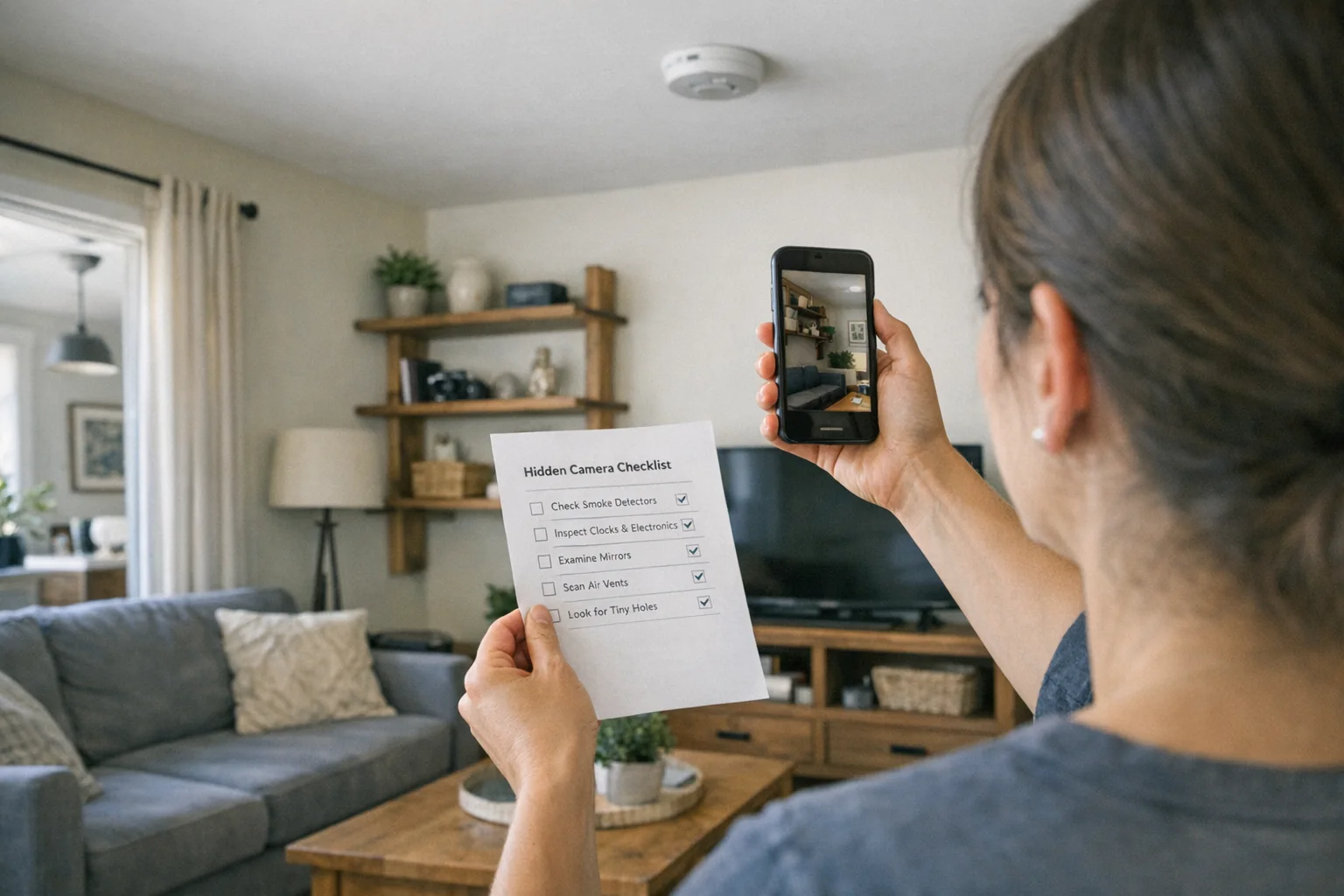
Best Hidden Camera Detector Apps (2026): iPhone & Android
The best hidden camera detector apps for iPhone and Android — what they find, what they miss, and when to upgrade to dedicated hardware.
Read guide