Detect Hidden Cameras and Trackers in Domestic Abuse Cases
Disclosure: This page contains affiliate links. We may earn a commission at no extra cost to you. We only recommend products we've tested or thoroughly researched. Full disclosure.
Need the full method stack? Start with our How to Find Hidden Cameras: Complete 2026 Detection Guide, then use this page for scenario-specific steps.
Technology-enabled intimate partner abuse affects 1 in 4 women and 1 in 7 men according to recent research from USENIX Security and NYU. Hidden cameras and GPS trackers have become increasingly common tools of control and surveillance in abusive relationships.
If you’re in immediate danger, call 911. For confidential support, contact the National Domestic Violence Hotline at 1-800-799-7233.
This guide provides research-backed methods to detect hidden surveillance devices while prioritizing your safety. The Safety Net Project provides comprehensive resources on technology abuse and privacy protection. Trust your instincts—if someone knows too much about your activities, they may be monitoring you.
What You’ll Learn
- Professional detection methods used by counter-surveillance experts
- How to identify the most common hiding spots for cameras and trackers
- Safety considerations before searching for or removing devices
- Free resources and support for technology abuse survivors
- Step-by-step detection techniques you can perform safely
How Do Abusers Use Hidden Cameras for Control?
Abusers use hidden surveillance to monitor, intimidate, and control victims by watching their daily activities, conversations, and movements without consent.
Research from the USENIX Security Symposium reveals that 97% of domestic violence programs report clients experiencing technology abuse, with hidden cameras being among the most psychologically damaging forms. Unlike visible security cameras, covert surveillance creates a constant feeling of being watched and eliminates any sense of privacy or safety.
Common motivations include:
- Monitoring who you talk to and where you go
- Gathering “evidence” to use against you in custody or legal proceedings
- Intimidation through letting you know you’re being watched
- Control by restricting your freedom and privacy
- Escalation of abuse during or after separation
The Cornell Tech research team found that abusers often use commercially available devices rather than sophisticated hacking, making detection more straightforward once you know what to look for.
Where Do Abusers Typically Hide Cameras and GPS Trackers?
Hidden cameras are most commonly placed in smoke detectors, digital clocks, picture frames, air fresheners, USB chargers, and everyday household items that blend into the environment.
Based on data from domestic violence advocates and counter-surveillance professionals, here are the most frequent hiding spots:
Indoor Camera Locations:
- Smoke detectors and carbon monoxide detectors (easy to wire, ceiling vantage point)
- Digital clocks and alarm clocks (always plugged in, bedroom/living room placement)
- Picture frames (especially those facing beds or common areas)
- Air fresheners and decorative items (inconspicuous, multiple room placement)
- USB wall chargers and power adapters (blend with legitimate electronics)
- Tissue boxes, books, and containers (temporary but effective concealment)
- Smart home devices (hijacked legitimate security or IoT devices)
GPS Tracker Locations:
- Under vehicles: wheel wells, bumpers, behind license plates
- Inside bags: purses, backpacks, laptop bags, gym bags
- Personal items: keychains, wallet attachments, inside phones cases
- Children’s items: backpacks, lunchboxes, sports equipment
- Work items: company vehicles, equipment bags, briefcases
Our Top Detection Tools
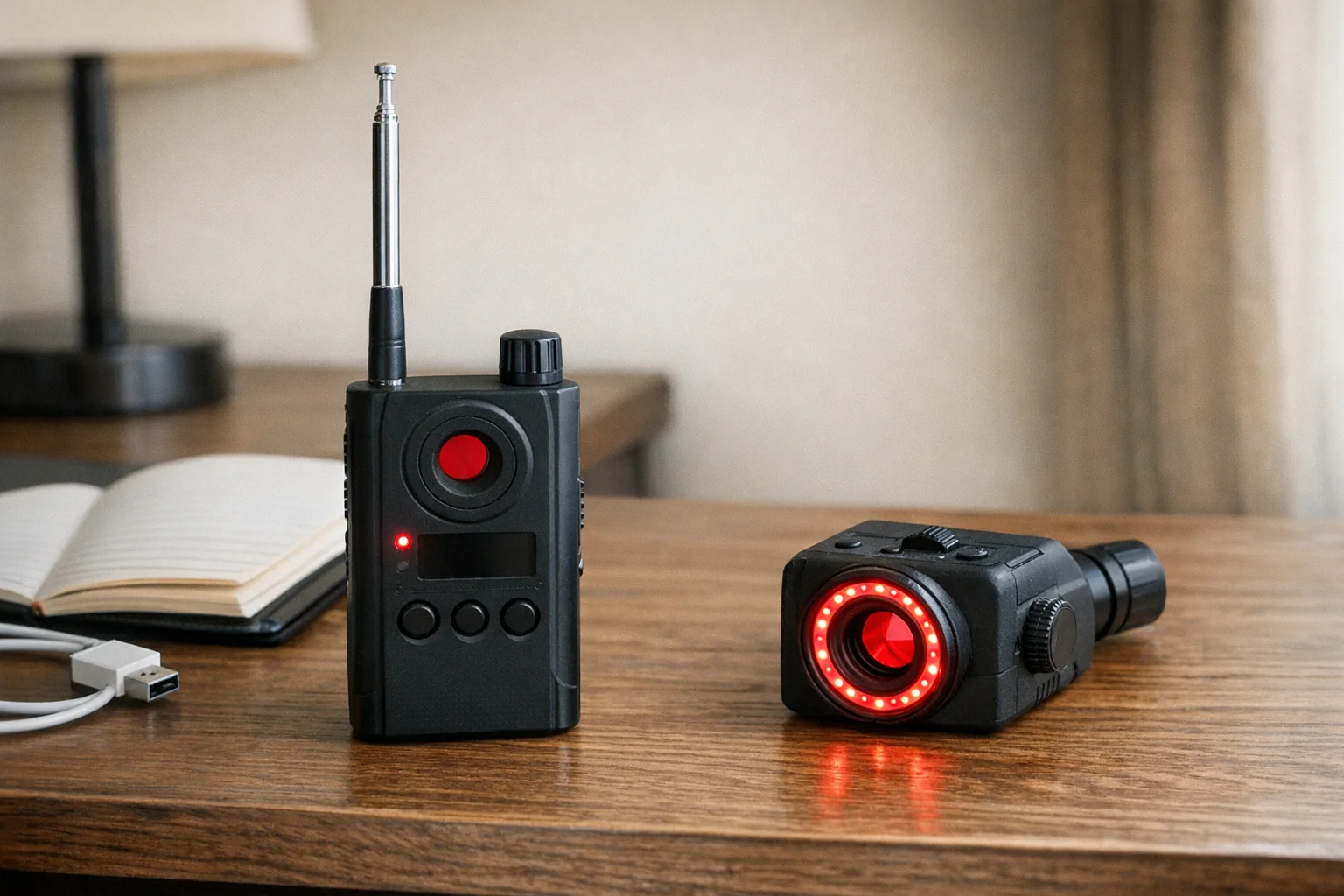
SpyFinder Pro Hidden Camera Detector
Most Comprehensive
RF detection plus lens finder in one professional-grade device
Compare price and specs JMDHKK Anti Spy Detector
Best Value
Detects RF signals, magnetic trackers, and has infrared scanner
Compare price and specsHow Can I Detect Hidden Cameras Using My Smartphone?
Your smartphone can detect many hidden cameras by scanning for infrared light, checking your WiFi network for unknown devices, and using the flashlight to spot camera lenses.
This method works because most spy cameras use infrared LEDs for night vision, which appear as purple or white dots through your phone’s camera sensor.
Infrared Detection Method:
- Make the room completely dark (close curtains, turn off all lights)
- Open your phone’s camera app and switch to selfie mode
- Slowly scan the room while looking at your phone screen
- Look for purple, white, or bright dots that appear on your screen but not with your naked eye
- Pay special attention to areas where cameras would have good vantage points
WiFi Network Scanning:
- Access your router’s admin panel (usually 192.168.1.1 or 192.168.0.1)
- Check connected devices list for unfamiliar items
- Look for devices with names like “IP Camera,” generic model numbers, or unknown manufacturers
- Document MAC addresses of suspicious devices
Physical Inspection with Phone Light:
- Use your phone’s flashlight to look for lens reflections
- Check for small holes in walls, decorations, or electronics
- Look for unusual wiring or power sources
- Notice items that seem out of place or recently moved
Limitations: This method won’t detect wired cameras, professionally hidden devices, or trackers without infrared capabilities.
What Professional Detection Equipment Should I Consider?
RF (radio frequency) detectors are the most effective tools for finding both hidden cameras and GPS trackers, as most surveillance devices transmit wireless signals.
Professional counter-surveillance equipment offers more comprehensive detection than smartphone methods:
RF Signal Detectors:
- Detect wireless transmissions from cameras, audio bugs, and GPS trackers
- Scan multiple frequency ranges (1MHz to 12GHz for comprehensive coverage)
- Provide directional finding to locate the source of signals
- Work with both analog and digital devices
Lens Detectors:
- Use LED lights to make camera lenses reflect light back
- Work on both powered and unpowered cameras
- Essential for finding wired cameras that don’t transmit RF signals
- Compact and easy to use discreetly
Magnetic Detectors:
- Find GPS trackers attached with magnets to metal surfaces
- Essential for vehicle searches where most GPS devices are magnetic
- Can locate devices even when powered off
- Work through non-metal barriers like plastic panels
Step-by-Step Detection Process
Start with safety planning, then conduct systematic searches using multiple detection methods for the most thorough results.
Step 1: Safety First
Before searching for surveillance devices, consider your safety carefully. If an abuser discovers you’re looking for their surveillance equipment, they may escalate their behavior. Consider:
- Contact a domestic violence advocate (1-800-799-7233) for safety planning
- Use a different location (friend’s house, library, workplace) to research and plan
- Have a safety plan for what you’ll do if you find devices
- Consider the legal implications of removing or disabling devices
Step 2: Document Everything
- Take photos of your living space before searching
- Write down any suspicious behavior or comments from the abuser
- Keep a log of when you feel like someone knows information they shouldn’t
- Save screenshots of suspicious network activity or unknown devices
Step 3: Systematic Physical Search
- Start with the most likely locations (smoke detectors, clocks, frames)
- Look for items that seem new or out of place
- Check for unusual wiring or power sources
- Examine USB ports and charging adapters carefully
- Use a flashlight to look for lens reflections
Step 4: Electronic Detection
- Use RF detector to scan each room methodically
- Check your WiFi network for unknown connected devices
- Perform smartphone infrared scan in complete darkness
- Test magnetic detector on vehicles and metal surfaces
Step 5: Vehicle Inspection
- Check common GPS tracker locations (wheel wells, bumpers, OBD port)
- Look inside the cabin (glove compartment, under seats, sun visors)
- Use magnetic detector on all metal surfaces of the vehicle
- Check for unusual battery drain or electronic behavior
Frequently Asked Questions
What are the most common places abusers hide surveillance devices?
Abusers commonly hide cameras in smoke detectors, clocks, picture frames, air fresheners, and charging adapters. GPS trackers are often placed under vehicles, inside bags, or attached to personal items. These locations are chosen because they blend into normal environments and provide good coverage of daily activities.
Can I detect hidden cameras with my smartphone?
Yes, smartphones can detect some hidden cameras by scanning for infrared light in dark rooms, checking for unknown devices on your WiFi network, and using specialized detection apps. However, professional RF detectors are more reliable and can find a wider range of surveillance devices.
What should I do if I find a hidden camera or GPS tracker?
Document the device with photos, note the location and time of discovery, and consider preserving it as evidence for law enforcement. Most importantly, contact a domestic violence advocate for safety planning before taking any action to remove or disable the device, as this could escalate the abuser’s behavior.
Are there free resources to help detect surveillance abuse?
Yes, the National Domestic Violence Hotline (1-800-799-7233) provides free tech safety support and can connect you with local resources. Organizations like the Safety Net Project (techsafety.org) offer detailed guides on detecting and addressing technology abuse.
How do I know if my car has a hidden GPS tracker?
Check under wheel wells, bumpers, inside the glove compartment, and near the OBD diagnostic port. Use an RF detector or magnetic detector to scan for devices. Look for unexplained battery drain, unfamiliar wiring, or signs that someone has accessed your vehicle.
Legal Resources and Next Steps
Protecting yourself legally is as important as finding surveillance devices. Evidence preservation and legal action can help you escape abuse and hold abusers accountable.
How to Get a Restraining Order or Order of Protection
Restraining orders (also called protective orders or orders of protection) are court-issued documents that legally prohibit an abuser from contacting, harassing, or monitoring you.
General process (varies by state):
-
File a petition with your local court (usually domestic relations, family law, or district court)
- Many courts provide free forms or templates
- Advocates at domestic violence organizations can help you complete forms
- You don’t need a lawyer (though one helps), and filing is free or low-cost
-
Describe the abuse in detail
- Include specific incidents with dates and descriptions
- Document surveillance devices found, monitoring behavior, and control tactics
- Explain why you need protection and what you’re asking the court to order
-
Request emergency protection if you’re in immediate danger
- Many courts issue temporary orders the same day
- Temporary orders typically last 14-21 days while a hearing is scheduled
-
Attend the court hearing
- Present evidence (photos of devices, police reports, witness statements)
- Explain why the abuser’s monitoring creates danger
- Answer questions from the judge or abuser’s attorney
-
Obtain the final order
- If granted, the order becomes enforceable by police
- Violating the order subjects the abuser to arrest and criminal charges
- Orders typically last 1-5 years and can be renewed
Make monitoring device evidence part of your case: Photos of hidden cameras, RF detector documentation, and screenshots of unknown WiFi devices strengthen restraining order applications significantly.
Evidence Preservation: Protecting Your Documentation
Proper evidence preservation ensures your documentation survives and remains secure from an abuser who might try to destroy it.
Digital evidence protection:
- Screenshot everything — hidden cameras, suspicious WiFi networks, strange devices, strange system files
- Add date stamps to all screenshots using your phone’s native tools or screenshot apps
- Create a master document listing all findings with dates, times, locations, and device descriptions
- Save to a secure cloud account the abuser cannot access
- Use a new email address (not one linked to shared accounts)
- Use a strong password (16+ characters, numbers, symbols)
- Enable two-factor authentication
- Consider ProtonMail or Tutanota for encrypted email
- Back up locally to an external drive kept in a safe location (not your home if possible)
Physical evidence:
- Document the devices with clear photos showing location, make/model, and installation method
- Keep the actual device if safely removed, stored away from the abuser
- Preserve the chain of custody — write down who found it, when, and where, with signatures if possible
- Don’t clean or alter the device, as fingerprint evidence matters for criminal prosecution
Communication records:
- Document threatening messages — take screenshots with date/time stamps visible
- Save emails to secure cloud storage
- Create a timeline of abusive surveillance incidents
- Keep dated notes of what the abuser said that revealed their monitoring knowledge
Legal Aid Organizations and Free Consultations
You don’t need money to get legal help. These organizations provide free or low-cost legal services for domestic abuse survivors.
National resources:
-
National Domestic Violence Hotline: 1-800-799-7233
- Free, confidential, 24/7 phone support
- Can connect you with local legal advocates
- Provides information about restraining orders and legal options
- Has tech-specific domestic violence resources
-
Legal Aid Society (in your state)
- Free legal representation for low-income clients
- Search: “Legal Aid [Your State]” or visit lawhelp.org
- Covers restraining orders, custody, and criminal matters
-
LawHelp.org
- Database of legal aid programs by state
- Find local free/low-cost legal services
- Self-help forms and information guides
-
National Legal Aid & Defender Association (NLADA)
- Directory of legal aid organizations nationwide
- Can help you locate services in your area
Specialized DV legal services:
-
Your local domestic violence shelter or hotline
- Usually have in-house legal advocates
- Provide free legal consultations
- Help with restraining orders at no cost
- Can connect you with attorneys for civil litigation
-
Law school clinics
- Free legal services provided by law students under attorney supervision
- Search: “law school clinic [your city]”
- Can handle restraining orders and civil cases
-
Pro bono attorneys
- Private lawyers volunteering free services
- Contact your state bar association for referrals
- Often specialize in domestic violence cases
Technology-Specific Legal Considerations
Digital surveillance in abuse cases has unique legal dimensions:
- Evidence admissibility: Document how you discovered devices (RF detector, physical inspection, etc.) — this strengthens your evidence chain
- Wiretapping laws: Removing or disabling surveillance devices must follow your state’s laws; consult an attorney first
- Device ownership: If you find a device the abuser owns but installed without consent, it’s still evidence of abuse
- Cyberstalking laws: Most states have laws criminalizing technology-enabled monitoring and harassment separate from traditional voyeurism statutes
- Text message evidence: Save threatening messages from the abuser mentioning monitoring, location knowledge, or surveillance
Safety-First Evidence Gathering
Important: Never gather evidence at the cost of your personal safety.
Signs it’s not safe to search for devices:
- The abuser is suspicious and watches you closely
- Searching would require extended time alone with the abuser
- You don’t have a safe exit plan
- The abuser has previously escalated violence when confronted
- You feel unsafe during the planning process
If gathering evidence creates risk:
- Focus on visible behavioral evidence — write down when the abuser knew things they shouldn’t
- Contact advocates early — they can help create a safe evidence-gathering plan
- Prioritize getting to safety — escape first, gather evidence after leaving
- Work with law enforcement — police can conduct official searches after restraining orders
Moving Forward: From Evidence to Action
Once you have evidence and documentation:
- Contact a domestic violence advocate before sharing evidence with anyone
- File for a restraining order — bring your documentation and photos
- Report to police — file a criminal surveillance abuse report with evidence
- Consult a family law attorney — important if custody is involved
- Develop a safety plan — leaving abuse is high-risk; professional advocates help ensure you leave safely
Remember: Evidence gathering supports your legal case, but your safety always comes first. Agencies exist specifically to help you—reach out to them early and often.
Warning Signs Someone May Be Monitoring You
Technology abuse often leaves behavioral clues before you find physical devices:
- They know details about your activities, conversations, or whereabouts they shouldn’t know
- Suspicious comments about where you’ve been or who you’ve talked to
- Your phone battery drains faster than usual
- Unexpected data usage on your phone or internet bill
- Gifts of electronics (especially items that could contain cameras)
- They insist on certain items being in specific locations in your home
- You feel like you’re being watched or followed
What to Do Next
Your safety is the top priority. Before taking any action based on what you’ve learned, reach out for professional support and create a comprehensive safety plan.
If you’ve found evidence of surveillance or suspect you’re being monitored:
- Don’t confront the abuser directly about surveillance devices
- Contact the National Domestic Violence Hotline at 1-800-799-7233 for confidential support
- Consider involving law enforcement if you have evidence of criminal surveillance
- Develop a safety plan with a domestic violence advocate
- Document everything you’ve found for potential legal proceedings
Remember: The goal isn’t just finding devices—it’s protecting your safety and regaining control over your privacy and life.
Technology Safety Resources:
- National Domestic Violence Hotline: 1-800-799-7233 (free, confidential, 24/7)
- Safety Net Project: techsafety.org (comprehensive tech abuse guides)
- National Teen Dating Abuse Helpline: 1-866-331-9474
- Cyber Civil Rights Initiative: cybercivilrights.org
Related Guides
Smart Picks
Smart Picks for This Guide
We curated this short shelf from high-performing recommendations for faster buying decisions.

SpyFinder Pro
Most accurate lens detection
Best when you need confident detection of hidden wired and non-transmitting devices.
- Consistent lens performance
- Clear pass/fail indicator
- Strong build quality

JMDHKK K18+
Most complete detection method
Four detection modes for quick room sweeps in hotels, Airbnbs, and rentals.
- RF + lens + magnetic + audio
- Affordable
- Simple sensitivity controls
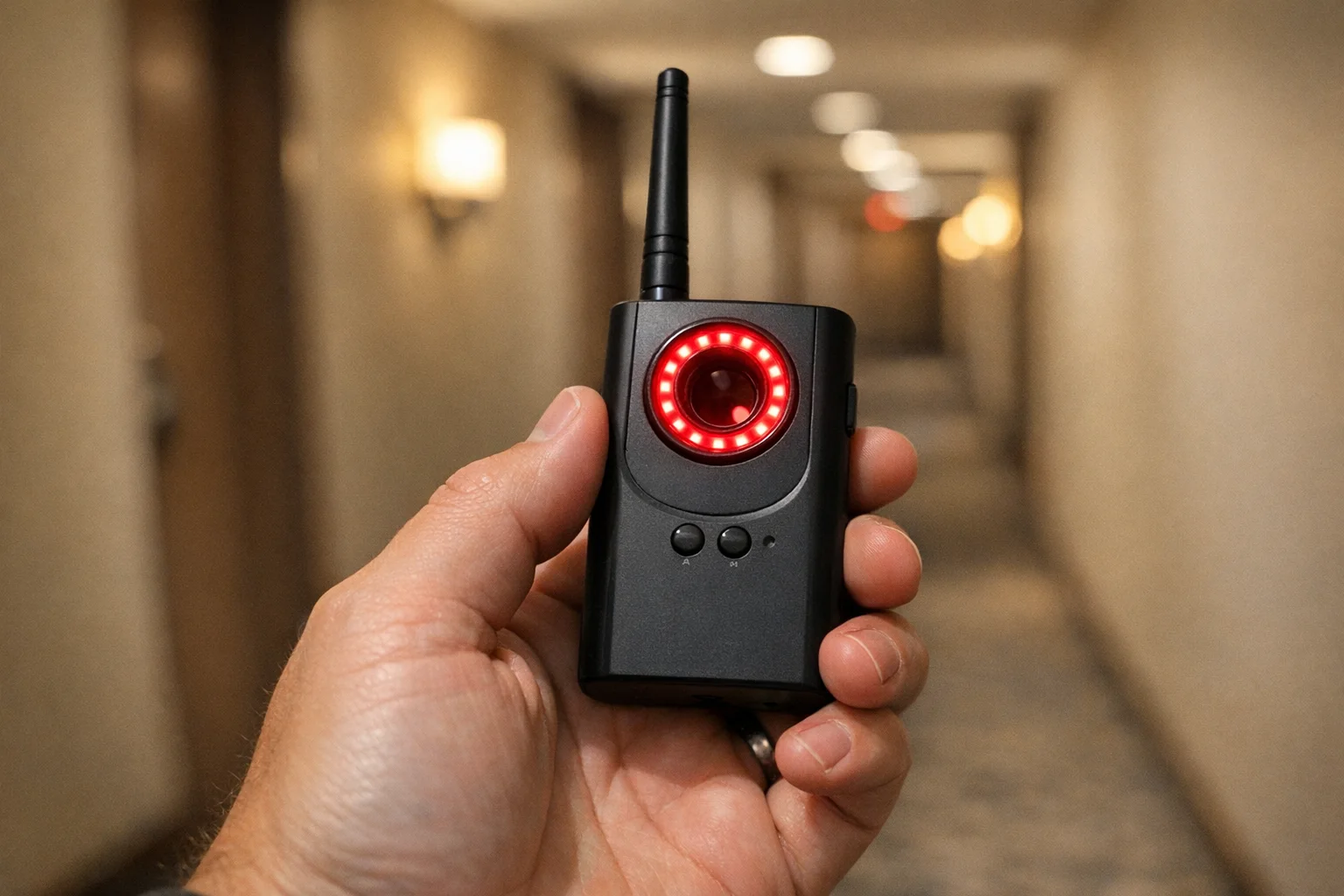
Navfalcon 2025 RF Detector
Best value RF upgrade
Higher sensitivity for RF-focused scans and fewer misses on battery-powered units.
- Improved RF filtering
- Longer scan reach
- Budget-sensitive option
We earn commissions from qualifying Amazon purchases. Full disclosure.
Get the free checklist
Printable hidden camera detection checklist + gear deals. Free, no spam.
Free updates. Unsubscribe anytime.
Frequently Asked Questions
What are the most common places abusers hide surveillance devices?
Can I detect hidden cameras with my smartphone?
What should I do if I find a hidden camera or GPS tracker?
Are there free resources to help detect surveillance abuse?
How do I know if my car has a hidden GPS tracker?
What to Do Next
Related Guides
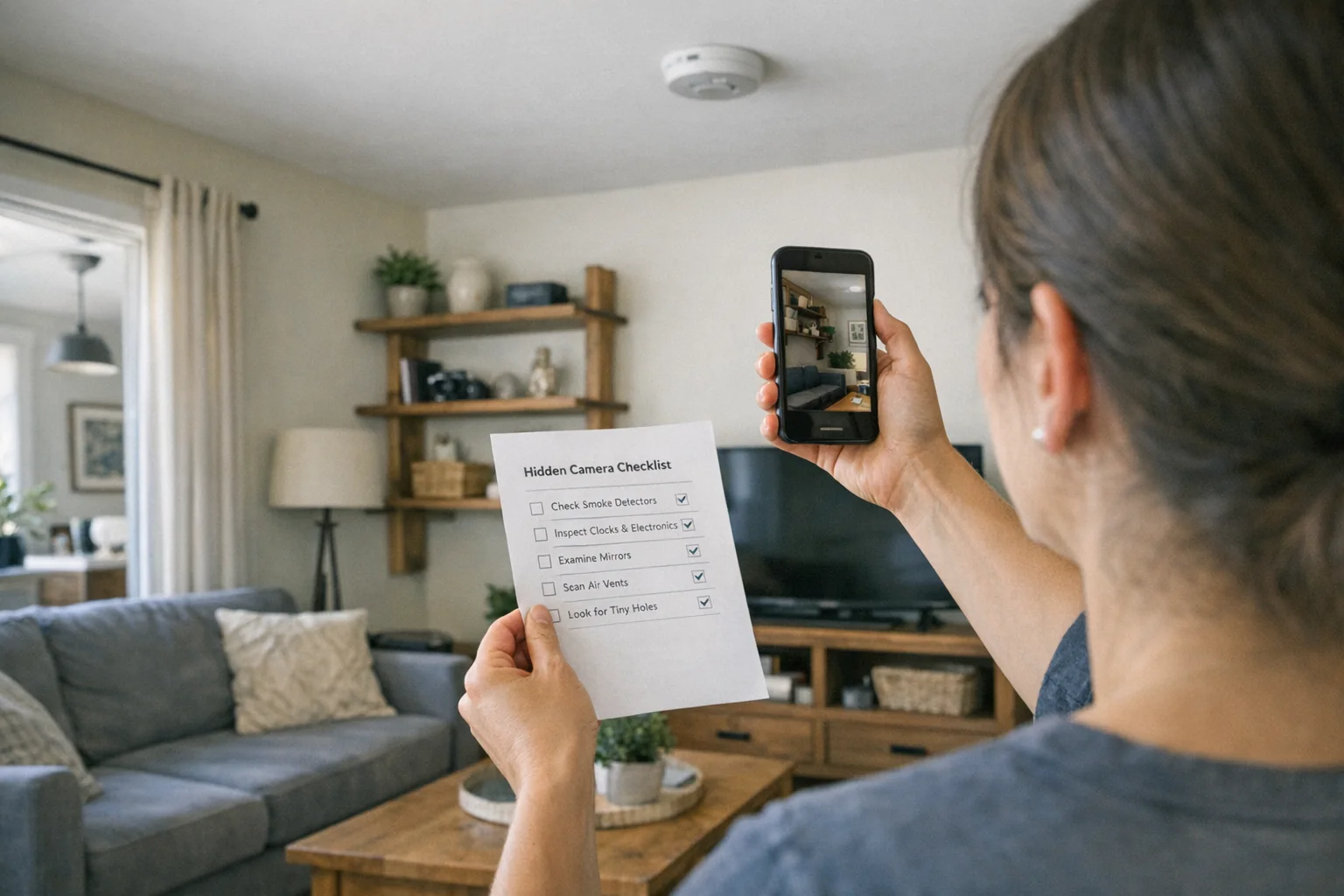
Best Hidden Camera Detector Apps (2026): iPhone & Android
The best hidden camera detector apps for iPhone and Android — what they find, what they miss, and when to upgrade to dedicated hardware.
Read guide
Workplace Surveillance Detection in Your Home Office (2026)
Methods to identify covert workplace monitoring at home, from software logs to unusual network activity and hidden devices, while protecting your privacy.
Read guide
How to Find Hidden Cameras with iPhone and Android (2026)
Use your iPhone or Android to detect hidden cameras with built-in tools. Step-by-step: flashlight sweep, IR check, WiFi scan, and when to upgrade to gear.
Read guide