How to Detect Hidden Cameras in Changing Rooms (2026)
Disclosure: This page contains affiliate links. We may earn a commission at no extra cost to you. We only recommend products we've tested or thoroughly researched. Full disclosure.
Need the full method stack? Start with our How to Find Hidden Cameras: Complete 2026 Detection Guide, then use this page for scenario-specific steps.
You deserve privacy when you’re most vulnerable. Unfortunately, reports of voyeurism and non-consensual recording in changing rooms have risen significantly in recent years, prompting increased awareness and legislative action. Whether you’re shopping, at the gym, or using public restrooms, knowing how to quickly detect surveillance equipment can protect your privacy and safety.
What you’ll learn:
- 5-minute detection routine that works in any space
- Phone apps and tools that actually work
- Legal rights and what to do if you find a camera
- Prevention tips to stay safe anywhere
- Common hiding spots criminals use
How Do I Quickly Check for Hidden Cameras?
Use the 5-minute sweep method. Start by turning off all lights and using your phone’s flashlight to slowly scan the room in a grid pattern. Camera lenses reflect light with a distinctive blue-green glint that’s easy to spot in darkness.
Focus on areas with clear sightlines to where you’ll be changing: eye level around mirrors, above and around stalls, and near seating areas. Move the light slowly—quick movements can miss small reflections.
Check suspicious objects immediately. Hidden cameras are often disguised as everyday items that belong in these spaces. Smoke detectors, air fresheners, hooks, and even toilet paper dispensers are common hiding spots. If something looks newer than everything else, positioned oddly, or has small holes or reflective surfaces, investigate closer.
Listen for electronic sounds. Most hidden cameras emit a faint buzzing or clicking sound when recording. In the quiet environment of a changing room or bathroom, these sounds are more noticeable. Stand still for 30 seconds and listen—especially near vents, electronics, or walls where wiring might run.
The key is developing a systematic approach rather than randomly looking around. Criminals choose predictable spots because they need clear views and power sources.
What Are the Warning Signs of Hidden Cameras?
Look for physical anomalies that don’t belong. Hidden cameras need three things: clear views, power, and concealment. This creates telltale signs you can spot with practice.
Visual indicators include:
- Small holes in walls, ceilings, or objects
- Devices with unusual blinking lights
- Mirrors positioned at odd angles
- Multiple objects serving the same purpose (two air fresheners, extra hooks)
- Loose or fresh screws on wall-mounted items
- Wires that don’t match what they’re connected to
Test mirrors immediately. The “fingernail test” works every time: place your fingernail against the mirror surface. In a normal mirror, you’ll see a gap between your nail and its reflection. In a two-way mirror, your nail will appear to touch its reflection directly.
If you find a two-way mirror in a changing room, leave immediately. There’s no legitimate reason for two-way mirrors in private changing areas.
Use your phone’s camera for infrared detection. Many hidden cameras use infrared night vision that’s invisible to your eyes but visible to phone cameras. Turn off all lights, open your phone’s camera app, and slowly scan the room. Look for small bright spots or glowing areas that you can’t see with your naked eye.
What Tools Actually Help Detect Hidden Cameras?
Professional RF detectors provide the most reliable results. These devices scan for radio frequencies that wireless cameras transmit. While phone apps claim to do this, dedicated hardware is far more sensitive and accurate.

Professional RF Signal Detector
Best Overall Detection
Detects both wired and wireless cameras with adjustable sensitivity. Used by security professionals.
Compare price and specs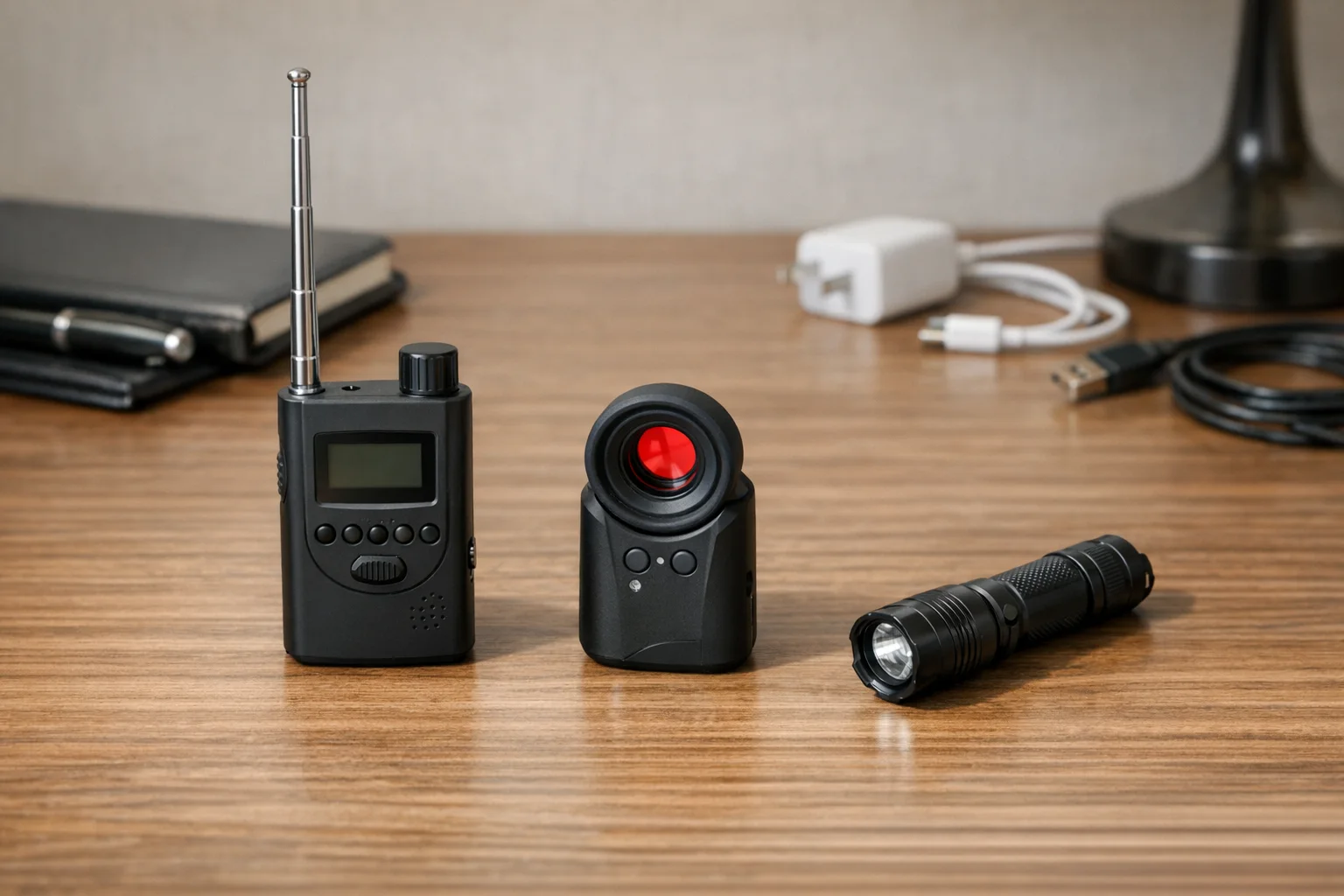
Lens Finder with LED Array
Best for Visual Sweeps
Makes camera lenses glow bright red from 45 feet away. Compact and battery-powered.
Compare price and specsSmartphone apps supplement but don’t replace physical checks. Several apps can help, but they have significant limitations:
- RF detector apps are weak and miss many devices
- Camera finder apps that use your phone’s magnetometer can detect some wired cameras
- Network scanners can find cameras connected to local WiFi
The most reliable phone-based method remains using your flashlight and camera for manual inspection.
Consider a portable signal jammer for high-risk situations. While not legal everywhere, personal signal jammers can prevent live streaming from hidden cameras in private spaces. Check local laws before purchasing or using these devices.
What Should I Do If I Find a Hidden Camera?
Don’t touch the camera or try to disable it. Your first instinct might be to destroy or cover the device, but this could eliminate crucial evidence. Instead, document its location with your phone camera, making sure to capture the surrounding area for context.
Leave the area immediately and alert others. If you’re in a public facility, warn other potential victims before they enter the compromised space. Block access if possible without touching the camera equipment.
Call law enforcement first, then management. Police need to secure evidence before it can be tampered with. After calling police, notify store management, gym staff, or property owners. In many cases, management may be unaware of the illegal surveillance.
Know your legal options. Hidden camera surveillance without consent is illegal in all 50 states, even where visible security cameras are permitted. You may have grounds for:
- Criminal charges against the perpetrator
- Civil lawsuit for privacy violations
- Claims against property owners for inadequate security
Document everything: take photos, get witness contact information, and save any communication with authorities or management.
Seek support if you’ve been recorded. Discovering you’ve been secretly filmed can be traumatic. Consider contacting victim support services or a privacy attorney who specializes in surveillance cases.
How Can I Protect Myself in the Future?
Develop a routine 60-second sweep. Make quick privacy checks a habit when entering any private space. This becomes second nature after a few weeks and provides peace of mind.
Choose facilities with visible security policies. Look for posted signs about surveillance equipment. Legitimate businesses that use security cameras will clearly disclose their presence and purpose.
Trust your instincts about uncomfortable spaces. If a changing room or bathroom feels off—too many electronic devices, unusual layouts, or just gives you a bad feeling—find an alternative. Your intuition often picks up subtle details your conscious mind misses.
Travel with basic detection tools. A small flashlight and RF detector can fit in any bag and provide confidence when staying in hotels, Airbnbs, or using public facilities in unfamiliar places.
Advocate for stronger privacy protections. Support legislation requiring clear disclosure of all surveillance equipment in semi-private spaces. Join or donate to privacy advocacy organizations working on these issues.
What to Do If You Find a Camera in a Changing Room
If you discover a hidden camera, your response in the first few minutes is critical for protecting evidence and your legal rights.
Immediate Actions—Don’t Touch the Camera
Do NOT touch, move, or attempt to disable the camera. Your instinct might be to destroy or cover it, but this eliminates crucial evidence that law enforcement needs. A camera with intact fingerprints, untouched positioning, and preserved condition becomes powerful evidence in criminal and civil proceedings.
Instead, take these steps:
- Leave the area immediately if you feel unsafe
- Photograph or video the camera from multiple angles without touching anything
- Capture surrounding context — show the location relative to mirrors, stalls, or seating
- Note the exact location — store name, specific dressing room number, date, time, and any identifying features of the room
Contact Law Enforcement
Call police immediately. Hidden cameras in changing rooms constitute criminal voyeurism—a felony in every US state. You are the victim, not a troublemaker. Police need to:
- Document the evidence while it’s undisturbed
- Investigate who installed the camera and how long it’s been there
- Preserve the device for forensic examination
- File a formal incident report you’ll need for civil claims
Get the police report number for your records.
Notify Management—But Don’t Accept Their Promises
After calling police, contact store management formally. Many stores will try to handle the situation privately without involving authorities. Don’t accept this.
- Request to speak with the manager or owner in person
- Show them your photos but don’t hand over the original camera
- Inform them police are already involved
- Ask for a written statement of their response
- Don’t sign anything acknowledging you won’t pursue legal action
Preserve Your Legal Rights
Consider contacting a privacy attorney within 24-48 hours while the incident is fresh. You may have grounds for:
- Criminal prosecution of whoever installed the camera
- Civil lawsuit for privacy invasion, emotional distress, and damages
- Claims against the business for failing to provide adequate security
- Punitive damages to deter future violations
An attorney can guide you through evidence preservation and help you understand compensation options.
Report to Local Media If Police Are Unresponsive
If police seem unwilling to investigate, contact local news outlets. Media attention creates public pressure and accountability. Include:
- The store name and location
- Timeline of your discovery and police contact
- Photos of the camera (with police permission)
- Statement about the store’s response
Media investigations often motivate police departments to take voyeurism cases more seriously.
For Gym and Spa Locations—Report to Licensing Boards
If you find a camera in a gym, spa, or licensed facility, report it to your city or state’s licensing board. These agencies can:
- Conduct surprise inspections of the facility
- Suspend or revoke business licenses
- Require security improvements
- Investigate patterns of violations at the same location
Licensing board complaints become part of the business’s permanent record and can prevent future violations.
Know Your Rights as a Victim
You have done nothing wrong. Discovering hidden surveillance doesn’t make you responsible for the crime. You are:
- Protected under victim assistance laws in most states
- Entitled to victim notifications about arrest and prosecution
- Eligible for victim restitution if the perpetrator is convicted
- Able to request impact statements at sentencing
- Protected from defamation claims if you truthfully report what you found
The person who installed the camera committed a serious crime. The store that failed to prevent it bears legal liability. You deserve support and justice.
Support and Advocacy Resources
If you’ve experienced non-consensual recording or voyeurism, these organizations provide support and advocacy:
- RAINN (Rape, Abuse & Incest National Network): rainn.org — 24/7 support for sexual assault victims and advocates
- Cyber Civil Rights Initiative: cybercivilrights.org — Support for online sexual harassment and image-based abuse
- ASIS International: asisonline.org — Professional security organization with research and resources on surveillance threats
- Electronic Frontier Foundation (EFF): eff.org — Privacy advocacy organization fighting for surveillance transparency and legal protections
- National Center for Victims of Crime: victimsofcrime.org — Comprehensive victim support resources and legal information
Step-by-Step Detection Routine
Follow this checklist every time:
- Initial scan (30 seconds): Look for anything obviously out of place or suspicious
- Light test (60 seconds): Turn off lights, use phone flashlight to scan for lens reflections
- Mirror check (15 seconds): Test all mirrors with the fingernail technique
- Audio check (30 seconds): Stand still and listen for electronic sounds
- Phone scan (45 seconds): Use front camera in darkness to check for infrared sources
- Exit strategy: Know where you’ll go if you find something suspicious
A quick 3-minute visual scan covers the most common hiding spots in a changing room and becomes faster with practice.
Best Portable Detectors for On-the-Go
When checking changing rooms, you need something discreet enough to use without drawing attention. These compact detectors fit in a purse or pocket:
TensaOne Pen-Style Detector
Most Discreet
Looks like a regular pen — scan changing rooms, fitting rooms, and restrooms without anyone noticing
Compare price and specs
Aroeally 4-in-1 Detector
Best All-in-One
RF + lens + magnetic + flashlight detection in a lightweight, pocket-friendly form factor
Compare price and specsFrequently Asked Questions
How can I tell if there’s a hidden camera in a changing room?
Turn off the lights and use your phone’s flashlight to scan the room for lens reflections. Check mirrors by pressing your finger against them - there should be a gap between your finger and reflection. Look for unusual objects, blinking lights, and inspect common hiding spots like smoke detectors, hooks, and vents.
Is it legal for stores to have cameras in changing rooms?
Only 13 US states explicitly prohibit changing room cameras (including Alabama, Arkansas, California, Connecticut, Delaware, Hawaii, Kansas, Maine, Michigan, Minnesota, New Hampshire, South Dakota, and Utah). In the other 37 states, cameras are legal if clearly posted and used only for security. However, hidden cameras without disclosure are illegal everywhere and constitute a serious privacy violation.
What should I do if I find a hidden camera?
Don’t touch the camera or try to disable it. Leave immediately and call the police. Take photos of the camera’s location if possible, but don’t interfere with potential evidence. Report the incident to store management and consider contacting a privacy attorney.
Can my smartphone detect hidden cameras?
Yes, your smartphone can help detect cameras. Use the flashlight to spot lens reflections, the front-facing camera to see infrared light from night-vision cameras, and download RF detector apps to scan for wireless signals from connected cameras.
What are the most common places to hide cameras in changing rooms?
Hidden cameras are commonly placed in smoke detectors, air vents, clothing hooks, mirrors, light fixtures, power outlets, and decorative items. They’re typically positioned at eye level or higher with a clear view of the changing area.
What to Do Next
Start practicing these detection techniques today—the skills become automatic with repetition. Consider investing in a basic RF detector if you frequently use public facilities or travel often.
Remember: you have the right to privacy in changing rooms and bathrooms. Don’t let the possibility of surveillance prevent you from living your life, but do take reasonable precautions to protect yourself.
Related Guides
Smart Picks
Smart Picks for This Guide
We curated this short shelf from high-performing recommendations for faster buying decisions.
SpyFinder Pro
Most accurate lens detection
Best when you need confident detection of hidden wired and non-transmitting devices.
- Consistent lens performance
- Clear pass/fail indicator
- Strong build quality

JMDHKK K18+
Most complete detection method
Four detection modes for quick room sweeps in hotels, Airbnbs, and rentals.
- RF + lens + magnetic + audio
- Affordable
- Simple sensitivity controls
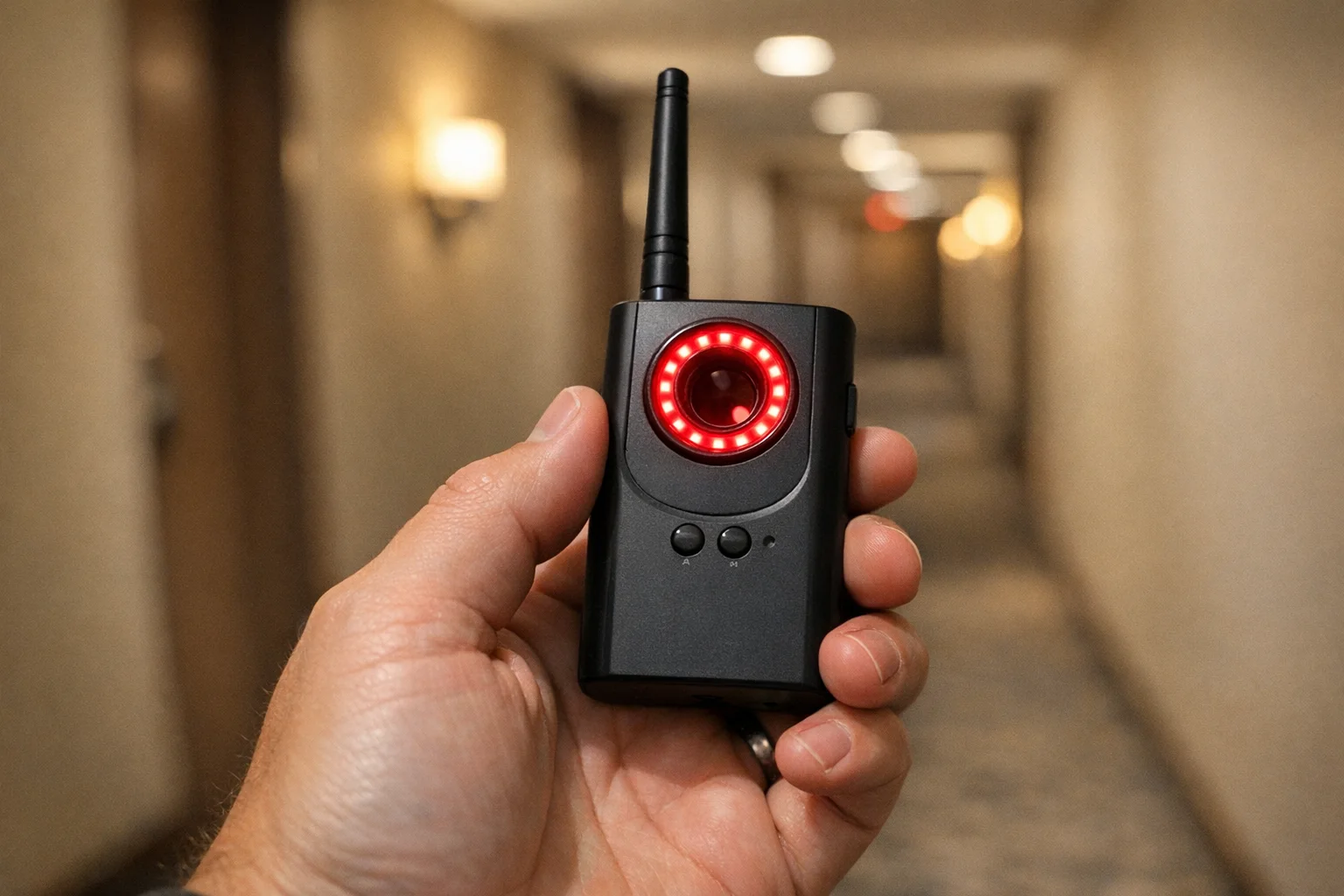
Navfalcon 2025 RF Detector
Best value RF upgrade
Higher sensitivity for RF-focused scans and fewer misses on battery-powered units.
- Improved RF filtering
- Longer scan reach
- Budget-sensitive option
We earn commissions from qualifying Amazon purchases. Full disclosure.
Get the free checklist
Printable hidden camera detection checklist + gear deals. Free, no spam.
Free updates. Unsubscribe anytime.
Frequently Asked Questions
How can I tell if there's a hidden camera in a changing room?
Is it legal for stores to have cameras in changing rooms?
What should I do if I find a hidden camera?
Can my smartphone detect hidden cameras?
What are the most common places to hide cameras in changing rooms?
Are changing room cameras legal if a sign is posted?
How do I check bathroom mirrors for hidden cameras quickly?
What evidence should I collect before reporting a changing room camera?
What to Do Next
Related Guides
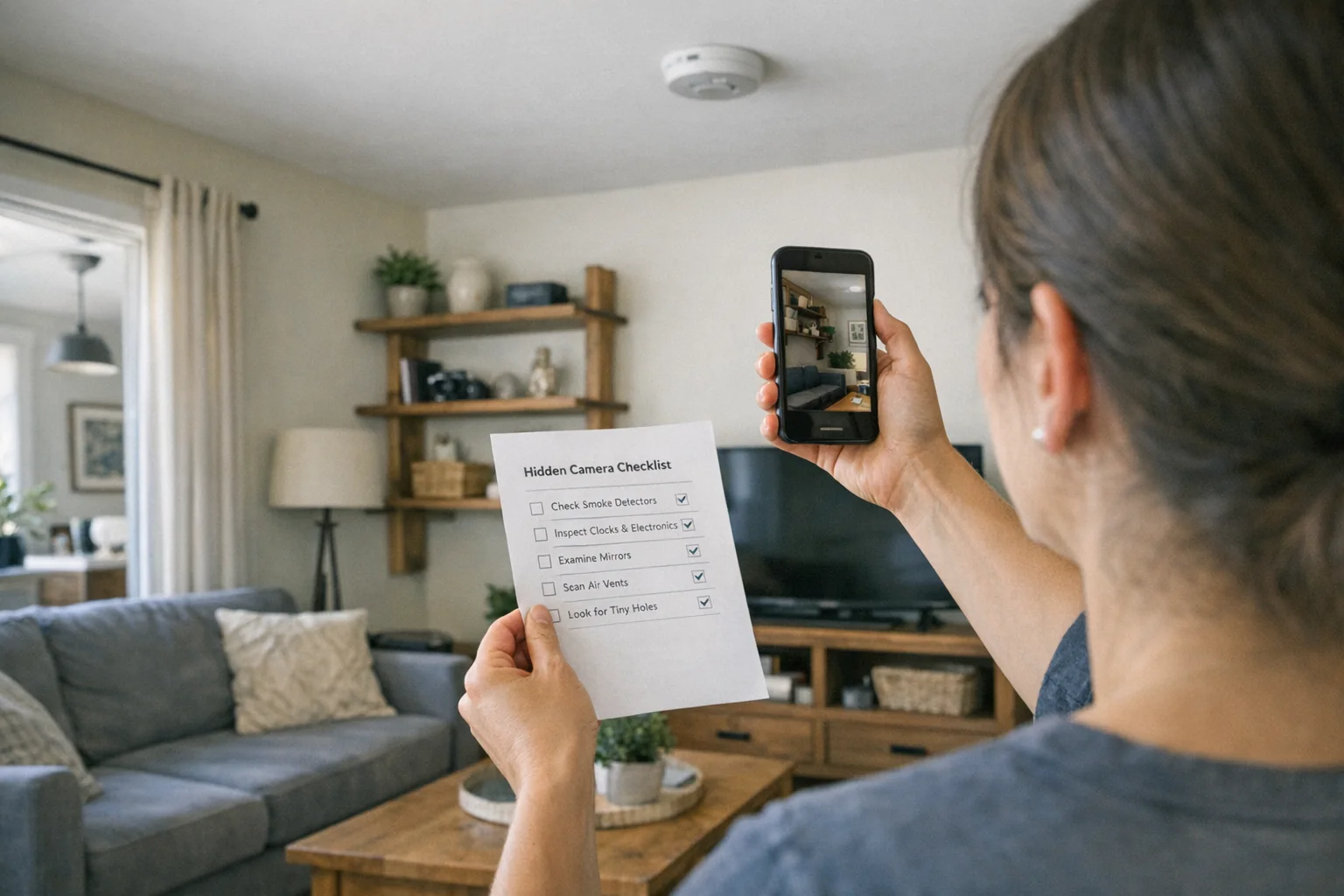
Best Hidden Camera Detector Apps (2026): iPhone & Android
The best hidden camera detector apps for iPhone and Android — what they find, what they miss, and when to upgrade to dedicated hardware.
Read guide
Workplace Surveillance Detection in Your Home Office (2026)
Methods to identify covert workplace monitoring at home, from software logs to unusual network activity and hidden devices, while protecting your privacy.
Read guide
How to Find Hidden Cameras with iPhone and Android (2026)
Use your iPhone or Android to detect hidden cameras with built-in tools. Step-by-step: flashlight sweep, IR check, WiFi scan, and when to upgrade to gear.
Read guide